September 2026 Nordic Football: Stream Allsvenskan on Vikings IPTV
August 22, 2026 · 9 min read
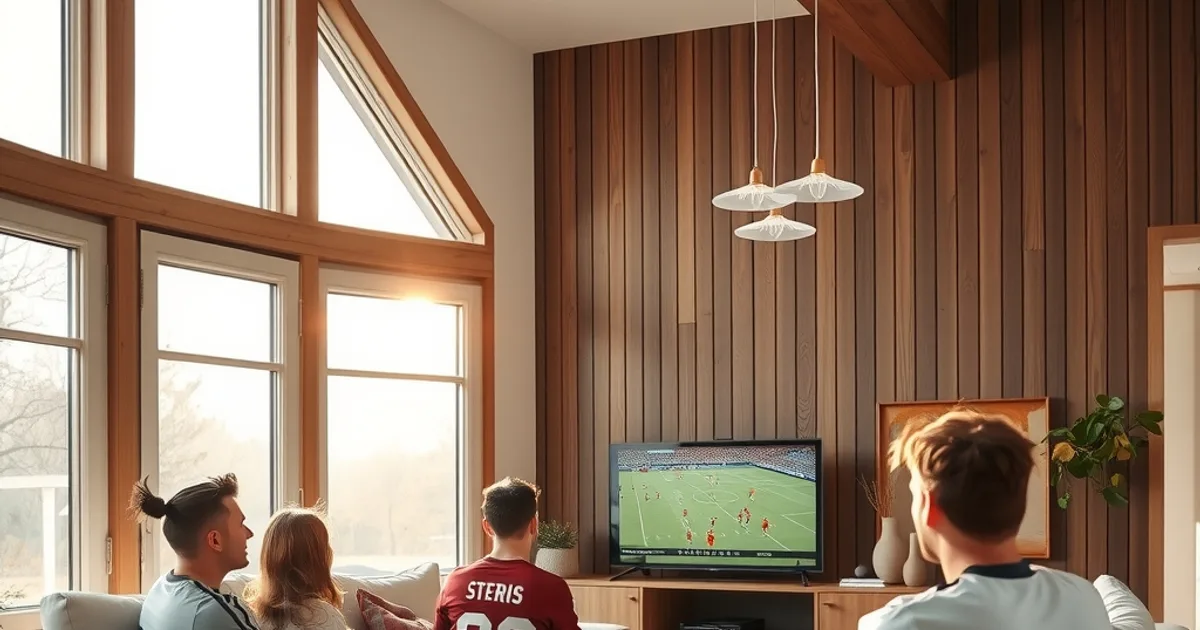
The Nordic football calendar doesn't slow down for anyone in September. Allsvenskan and Eliteserien are both deep into their autumn run-ins, and the Premier League has three full rounds of fixtures stacked into the same four weeks — weekend match days on September 6, 13 and 20, with the top flight in England pausing only for the international break that starts September 26. If you searched for "allsvenskan streaming september 2026" because you want this settled before kickoff next week, you're in the right place — and you're not alone. Search interest for this exact phrase spikes every year in the days before the first September round, and most of the guides that show up are either generic service comparisons or outdated season previews.
This one is different. Instead of just telling you which leagues are playing, we're walking through how to get a Vikings IPTV setup that survives three straight weekends of peak-hour demand: the 4K picture settings that matter for fast-moving football, how to run every room in the house off one connection without buffering, how to actually verify the Nordic channels you need are live on your account before kickoff, and which device holds up best when everyone in your building is streaming the same match at once.
None of this requires guesswork. It's the same checklist we'd run through with our own household before a big Allsvenskan or Premier League weekend — just written out so you can do it in the next twenty minutes, before the first whistle on September 6.
September 2026 Nordic Football Calendar: Allsvenskan, Eliteserien & Premier League Match Days
Three leagues, three overlapping schedules, one month. Allsvenskan is in the business end of its season by September, with matches typically played across Saturday and Sunday each week — expect rounds landing on or around September 6, 13 and 20, the same weekend pattern Eliteserien follows in Norway. Both leagues tend to cluster kickoffs in the early-to-mid afternoon local time, which means Nordic viewers abroad need to plan around a compressed evening window rather than an all-day spread.
The Premier League adds a second layer on top. September covers three full English matchweeks, with fixtures split across Friday night, Saturday and Sunday slots — a Friday-night opener, a packed Saturday card, and a Sunday closer most weeks. The one date worth circling is September 26: that's the start of an international break, so if you're building a viewing calendar, treat the third week of September as the last uninterrupted club-football weekend until October.
The overlap is the actual planning problem. A Saturday in mid-September can easily have an Allsvenskan or Eliteserien kickoff early afternoon, followed by two or three Premier League matches back to back into the evening. That's exactly the kind of sustained, multi-hour streaming load that exposes a weak setup — which is why the rest of this guide focuses on making sure your connection, your device and your account are ready for it, not just your calendar.
Not sure if your Allsvenskan or Eliteserien channels are live on your plan yet?
Vikings IPTV 4K Settings for Live Sports: Bitrate, Refresh Rate & Codec Selection
Football is the hardest content type to stream well. Fast horizontal camera pans, a ball moving at speed, and a crowd full of fine detail all stress a codec far more than a static studio show — which is why the same IPTV setup that looks fine for a talk show can turn blocky the moment a match kicks off. Three settings decide whether that happens: bitrate, refresh rate and codec.
For live sports, prioritize a higher, stable bitrate over a marginally sharper resolution — a rock-solid 1080p stream beats a 4K stream that's constantly renegotiating quality mid-match. If your player and TV support it, match the stream's refresh rate rather than leaving your display on a fixed 60Hz; most Nordic and English top-flight broadcasts are shot at 50fps, and a mismatched refresh rate is what causes the subtle judder viewers often blame on "buffering" when it's actually a display setting.
Codec matters just as much as either of those. Where your device supports it, HEVC/H.265 gives you a materially better picture at the same bandwidth than older H.264 streams, but only if the device is decoding it in hardware rather than software — a device straining to software-decode a high-bitrate codec is a common, invisible cause of dropped frames during exactly the fast-motion moments a match delivers most. We go deep on this in our hardware decoding and 4K buffering guide, and it's worth five minutes before September 6 if you've never checked which decoding mode your box is actually running.
Multi-Room Game Day Setup: Watch Every Room Simultaneously Without Buffering
A September weekend with Allsvenskan in the afternoon and Premier League doubling up into the evening is precisely when a household's IPTV setup gets tested hardest — one screen in the living room, maybe another in a bedroom or kitchen, all pulling from the same connection at once. The failure mode is familiar: everything's fine until a second or third stream opens, and then all of them start stuttering together.
The fix isn't more bandwidth alone — it's how that bandwidth is allocated. Wired connections should take priority over WiFi wherever possible, since a single congested wireless band is the single most common cause of multi-room buffering, not the internet plan itself. Our multi-room setup guide walks through the practical version of this: which rooms to wire, how to split load across bands, and how to sequence which devices start streaming first so the whole house doesn't renegotiate bandwidth at the exact moment kickoff hits.
If you're only planning for one room this September, it's still worth reading — the same principles (wired backbone, dedicated bandwidth per stream, no idle devices hogging the connection in the background) are what separates a smooth single-room stream from one that buffers the moment a neighbor's WiFi gets busy at the same time.
Nordic Channel Verification: Confirming SVT, NRK, DR & discovery+ on Your Plan
Before the first weekend of September, it's worth doing a five-minute channel check rather than assuming everything is where you left it. Nordic broadcasters like SVT, NRK, DR and discovery+ carry different pieces of the Allsvenskan, Eliteserien and wider Nordic football picture, and which matches sit behind which broadcaster can shift from one season to the next as rights deals renew.
The practical version of this: open your Vikings IPTV channel list a day or two before kickoff, not five minutes before, and confirm the specific channels you're planning to watch are showing live content and an EPG (electronic program guide) entry for the match you want. An empty or frozen guide entry the night before is a much easier problem to flag and fix than discovering it mid-match on Saturday afternoon.
If anything looks off — a channel missing from the list, a guide entry that doesn't match the fixture you're expecting — that's exactly the kind of thing worth confirming with support before kickoff rather than during it. It takes a few minutes and removes the single most common source of last-minute matchday stress.
Preventing Peak-Hour Buffering: Network QoS, Ethernet vs WiFi, ISP Throttling Fixes
Peak-hour buffering during a big football weekend usually traces back to one of three places: your router isn't prioritizing the stream, you're on WiFi when you should be wired, or your ISP is throttling video traffic without telling you. All three are fixable, and none of them require upgrading your internet plan.
Start with router-level Quality of Service (QoS), if your router supports it — prioritizing your streaming device's traffic over background downloads, cloud backups and other devices on the network makes a real difference during exactly the hour a match kicks off, when everyone's connection is busiest. Ethernet over WiFi is the next lever: a wired connection removes the variability that wireless interference, distance from the router and competing 2.4GHz devices all introduce, and it's the single change that fixes the most buffering complaints we hear about.
ISP throttling is the one people underestimate. Some providers quietly slow streaming traffic during peak hours, especially in the evening when everyone in the neighborhood is online at once — and it can look identical to a bandwidth problem when it isn't. Our guide on detecting ISP throttling and running a Nordic VPN test walks through how to tell the difference and what to do about it, and it's worth running once before the September rush rather than troubleshooting live during a match. See also our dedicated piece on troubleshooting buffering during peak hours for the full step-by-step.
Best Device for September Sports: Fire TV Stick vs Android Box vs Smart TV (Ethernet Requirement)
Device choice matters more for sports than for anything else you'll stream, because football's fast motion and long match duration expose weak hardware decoding faster than any other content type. A Fire TV Stick is fine for casual, single-room viewing, but its WiFi-only design and modest processor are the first thing to strain across a three-match Saturday.
An Android TV box with a wired Ethernet port and proper hardware HEVC decoding is the more resilient choice for anyone planning to watch multiple matches back to back this September — our Android TV box 4K setup guide covers the exact configuration we'd recommend before the first big weekend. Smart TVs are a middle ground: strong on picture quality if the panel and processor are recent, but often let down by an underpowered built-in streaming app compared to a dedicated box.
If you're watching on Apple hardware, Apple TV 4K remains one of the steadier options for a demanding football weekend, provided it's wired rather than on WiFi — we cover the full setup in our Apple TV 4K guide built around last year's World Cup coverage, and the same settings apply directly to September's Allsvenskan and Premier League schedule. Whichever device you land on, the one non-negotiable across all three is Ethernet over WiFi whenever a wired run is physically possible.
Get your household ready for three straight weekends of Nordic and Premier League football.
Final Pre-Game Checklist: Internet Speed, Router, Device, and Account Setup
With three weekends of overlapping Allsvenskan, Eliteserien and Premier League football landing before the international break, it's worth running one short checklist rather than hoping everything holds up on the day. Confirm your internet speed actually supports the number of simultaneous streams you're planning for the busiest hour of the weekend, not just your baseline usage. Restart your router the night before a big matchday rather than mid-match — a fresh connection handles peak load noticeably better than one that's been running for weeks.
Check that your primary streaming device is wired via Ethernet if a run is possible, and that its decoding settings match what we covered above. Open your Vikings IPTV channel list and EPG a day ahead to verify the specific broadcasters and matches you're planning to watch are showing correctly. And if you haven't set up multi-room viewing yet but know the house will have more than one screen on during a big Saturday, do it before kickoff rather than during the first match.
For deeper detail on any of these steps, see: /blog/vikings-iptv-multi-room-setup-guide, /blog/vikings-iptv-apple-tv-4k-world-cup-2026, /blog/troubleshooting-buffering-during-world-cup-peak-hours, /blog/vikings-iptv-android-tv-box-4k-setup, /blog/hardware-decoding-iptv-4k-buffering-fix, and /blog/detect-isp-throttling-iptv-nordic-vpn-test.
None of this takes more than twenty minutes if you run through it a day or two before the first September weekend. The households that skip it are the ones troubleshooting mid-match; the ones that don't are just watching football.
Frequently asked questions
What dates should I plan around for September 2026 Nordic football?
Expect weekend match rounds for Allsvenskan and Eliteserien landing around September 6, 13 and 20, overlapping with three Premier League matchweeks spread across Friday, Saturday and Sunday each week. The Premier League then pauses for an international break starting September 26, making the third weekend of September the last uninterrupted club-football weekend of the month.
Do I need 4K to watch Allsvenskan and Premier League matches smoothly?
Not necessarily. A stable, well-configured 1080p stream at a consistent bitrate will look and perform better during fast-moving football than a 4K stream that keeps renegotiating quality. If you do want 4K, make sure your device is hardware-decoding the stream's codec rather than software-decoding it, which is the more common cause of dropped frames than the resolution itself.
Why does my stream buffer only during evening matches?
Evening buffering that doesn't happen earlier in the day is a classic sign of either neighborhood-wide network congestion or ISP throttling during peak hours, rather than a problem with your setup itself. Running a throttling test and switching from WiFi to Ethernet if possible are the two fastest ways to rule this in or out.
Can I watch different matches in different rooms at the same time?
Yes, with the right setup. The key factors are a wired backbone connection wherever possible, prioritizing streaming traffic through your router's QoS settings if available, and starting your devices in a sensible order rather than opening every stream at once right at kickoff.
How do I confirm SVT, NRK, DR or discovery+ coverage is working before kickoff?
Open your Vikings IPTV channel list and electronic program guide a day or two before the match and confirm the specific channel is live with a correct guide entry for the fixture you want. If anything looks missing or frozen, flag it with support ahead of kickoff rather than during the match.
What's the single best upgrade before a big football weekend?
Switching your primary streaming device from WiFi to a wired Ethernet connection is the change that resolves the largest share of buffering complaints, more consistently than upgrading your internet plan or your device itself.
Read next: the pricing page or the FAQ.