Stop Juggling 5 Streaming Apps: One Vikings IPTV for All Nordic Sports
September 14, 2026 · 9 min read
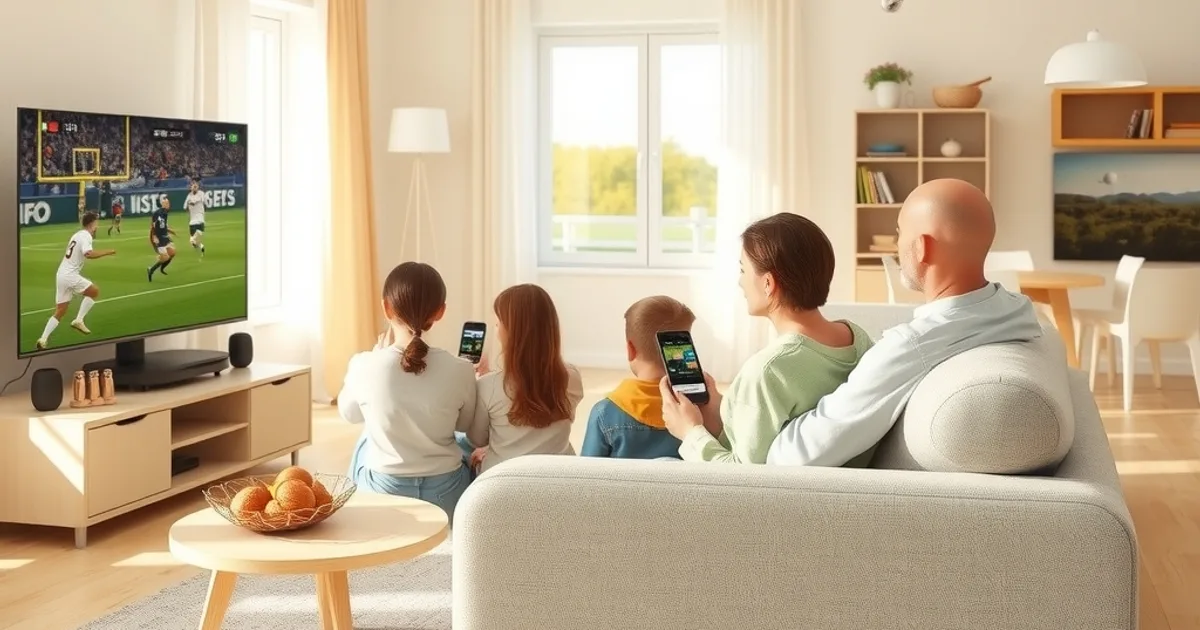
Search for a Nordic IPTV service and you'll mostly find provider lists and cable-versus-streaming price comparisons. What you won't find is anyone explaining why so many Nordic households now juggle five or six logins just to watch television — Netflix for series, Disney+ for the kids, HBO for prestige drama, Viaplay or C More for Nordic sport, plus whichever public broadcaster app carries the news and the national team. Nobody designed that mess on purpose for you; broadcasters designed it on purpose for themselves.
This summer's World Cup made the fragmentation impossible to ignore. A single tournament, watched by families across four countries, required a different pair of channels in every living room — and that was before anyone added their unrelated Netflix or Viaplay bill on top. September's subscription fatigue data suggests households noticed: 41% of Nordic consumers now say they feel overwhelmed by how many services they pay for, and the average household spends around €750 a year keeping them all active.
This article isn't a cable-versus-IPTV cost comparison — we've covered that ground already. It's about a newer, sharper pain: even fully cut-the-cord, streaming-only households are still fragmented, because the broadcasters themselves refuse to consolidate. Here's why that happens, what a Nordic IPTV service like Vikings actually does differently, and how to tell a legitimate one from a risky one.
The 2026 Nordic Streaming Fragmentation Crisis: What This Summer's World Cup Split Proved
The 2026 FIFA World Cup, held across the US, Mexico and Canada from June to July, expanded to 104 matches — the biggest edition in the tournament's history. In the Nordics, FIFA didn't sell those rights to one platform per country, let alone one platform for the whole region. Sweden got its coverage split between SVT and TV4. Norway split between TV2 and NRK. Denmark split between DR and TV2. Finland split between YLE and MTV. That's eight different channels across four countries for a single tournament — and a household that wanted every match its national team could play needed to know, match by match, which of two apps to open.
Nordic families absorbed that friction because the World Cup only happens every four years. What's harder to absorb is that the same pattern repeats every season for club football. The Champions League 2026-27 league phase, now underway, is licensed differently country by country and sometimes channel by channel within a country — a subject our dedicated guide to Champions League streaming in the Nordics breaks down in full. Add Premier League, Eliteserien, Allsvenskan and the various domestic cups, and a genuinely engaged sports household can be tracking rights across half a dozen apps at once, on top of Netflix, Disney+ and HBO for everything that isn't live sport.
None of this is a glitch. It's the deliberate result of how broadcast rights get sold — and understanding that logic is the first step to seeing why a consolidated Nordic IPTV service exists in the first place.
Wondering how many of your own apps a single Nordic IPTV account could actually replace?
Why Broadcasters Keep Channels Deliberately Separate (Licensing Territorialism Explained)
Rights holders like FIFA, UEFA and the major studios don't sell a single Nordic license and let one platform show it everywhere. They sell rights territory by territory, and often split even within a single country, because dividing the market lets them run parallel auctions — SVT bidding against TV4, DR against TV2 — and collect a higher combined price than a single unified deal would fetch. Every extra channel that can plausibly bid is more revenue for the rights holder, even though it's a worse experience for the viewer stuck reassembling the coverage afterward.
This is why you'll rarely see a public broadcaster and a commercial one competing for the exact same package: they typically split by match tier, by device platform, or by exclusivity windows, so both can justify paying. The viewer isn't part of that negotiation. Nobody in the room representing FIFA, UEFA or Disney is optimizing for 'can a Danish family watch everything in one app' — that outcome would actually reduce how many separate deals can be sold.
Even the broadcasters are starting to admit the model is straining. In April 2026, Norwegian broadcaster TV 2 and media group Amedia announced a joint streaming platform for Norwegian football rights running from 2026 to 2034 — a rare admission from two competitors that fragmenting local football coverage across separate apps was hurting both of them more than it helped. That's a broadcaster-side consolidation for one sport in one country. A Nordic IPTV service does the same thing across all of them, for viewers, right now — you don't have to wait for the next rights cycle to see the benefit.
The True Cost of Keeping Multiple Subscriptions: Subscription Fatigue by the Numbers
Subscription fatigue isn't a vague feeling anymore — it shows up in the data. As of September 2026, 41% of Nordic consumers report feeling fatigued by the sheer number of services they pay for, and the average household's combined annual spend on subscriptions (streaming, sports, and beyond) sits around €750. That figure isn't one big line item; it's the sum of several small, easy-to-forget charges that each feel reasonable in isolation and add up to something nobody actually chose.
The mechanism behind that number is well documented in behavioral research on recurring payments: subscriptions are priced to be individually forgettable. €9 here, €12 there, an annual sports add-on renewed automatically — none of it triggers the same scrutiny a single €750 bill would. A Nordic IPTV service reverses that framing by putting everything behind one recurring payment you actually see and evaluate, rather than five or six you don't.
There's a second, less-discussed cost: decision fatigue on any given evening. 'Which app has the match, which app has the show the kids want, did we let the trial expire' is a tax paid in minutes and friction every single night, on top of the money. Consolidation solves both at once — one login removes both the invisible cost and the visible one.
What a Nordic IPTV Service Consolidates That Netflix, Viaplay, SVT and HBO Won't
A Nordic IPTV service like Vikings works from a different starting assumption than any single broadcaster or streamer: it doesn't hold exclusive rights to anything, so it has no incentive to keep you locked to one channel. Instead it aggregates live channel feeds and on-demand content into a single interface — the Nordic public broadcasters, the major international entertainment channels, and international sport, all reachable from one app on one login, instead of reassembling them yourself app by app.
That's the structural difference worth understanding: Netflix, Disney+, HBO, Viaplay and the public broadcaster apps are all built to keep you inside their own walls. None of them has a business reason to make it easier to leave for a competitor's content, even when that content is what you actually want to watch tonight. A Nordic IPTV service has the opposite incentive — its entire value proposition is reducing how many apps you need open.
This isn't a claim that IPTV replaces every streaming exclusive ever made — some original series genuinely only exist on one platform. It's a claim about the live-TV and channel-surfing layer of your evening: sport, news, entertainment channels, kids' programming. That's the layer where Nordic households are paying repeatedly for access that a single service already consolidates.
Legal IPTV vs Illegal Streams: How to Tell the Difference
'IPTV' as a delivery method is completely neutral — it just means television delivered over an internet connection instead of a satellite dish or a cable line. Netflix is technically IPTV. The reputational baggage around the term comes from a specific category of unlicensed services that rebroadcast content they have no rights to, usually identifiable by a few consistent warning signs: prices far below what licensed distribution actually costs, no verifiable business identity behind the service, no functioning customer support beyond a chat bot, and channel lineups that include content no legitimate aggregator could plausibly license.
A legitimate provider, by contrast, is reachable, answers questions about what it actually offers before you pay, and doesn't promise an impossible catalogue at an impossible price. Our /blog/is-iptv-legal-nordic-2026-swedish-law-safe-streaming guide breaks down exactly what makes an IPTV service legal to use under current Swedish and regional law — worth reading before you commit to any provider, not just Vikings, since the criteria apply network-wide.
The practical takeaway: don't judge a service by the word 'IPTV' alone. Judge it by whether it behaves like a real business — a service with real support, real setup help, and no pressure to look the other way about what it's selling you.
Champions League 2026-27 and the Next Tournament Split: How One Login Avoids It
The World Cup split is over until 2030, but the pattern it exposed is playing out again right now with the Champions League 2026-27 league phase. Matchday scheduling puts multiple fixtures in the same time slot across different rights holders, so a household following more than one club — or more than one country's coverage — runs into the same 'which app has it' problem on a weekly basis rather than once every four years. Our /blog/champions-league-2026-27-nordic-streaming-guide maps out exactly which windows are contested and how coverage is currently split.
The other predictable failure point is peak-hour performance: everyone in the region trying to stream the same 21:00 kickoff at once. Our /blog/champions-league-buffering-fix-peak-hours-vikings-iptv guide covers fixing that specifically, because a consolidated app doesn't help if it buckles at kickoff — reliability under load matters as much as coverage breadth.
The point isn't that any one app is perfect. It's that a Nordic IPTV service turns a weekly 'which channel' decision into a non-decision — open one app, and the fixture is either on it or it isn't, without needing to remember which broadcaster won which auction this season.
Device Setup: Pick Your TV, Install Once, Cancel Everything Else
The setup barrier is smaller than most people assume, and it's the same regardless of which Nordic country you're in. Vikings IPTV runs on the devices households already own — smart TVs, Fire Stick, Android boxes, phones and tablets — through a single app install and one login, not a separate app per channel bundle. Our /blog/how-to-watch-vikings-iptv-2026-legal-setup guide walks through the legal installation process on each supported device, including which app store to use and how to avoid the sideloading shortcuts that create security and reliability problems.
The realistic migration path is gradual, not all-or-nothing: install the app, test it during one match or one evening of normal viewing, and only then start actually cancelling the subscriptions it's replacing. Doing it in that order — verify first, cancel second — avoids the common mistake of dropping five services in one weekend and discovering a gap in coverage you didn't check for.
Multi-device households don't need to coordinate which family member has which app open on which device. One account, installed once per screen, removes the 'wait, which login goes with which service' conversation that recurs every time someone new wants to watch.
Stop reassembling your evening across five apps — see the plans and pick the one that fits your household.
Monthly Savings: A Worksheet for Counting Your Own Subscription Stack
Rather than quote generic savings figures that won't match your household, the more useful exercise is counting your own stack. List every service currently active on your account or your household's shared card: general entertainment (Netflix, Disney+, HBO), Nordic-specific platforms (Viaplay, C More, public broadcaster premium tiers), and any sport add-ons purchased separately for a single competition. Most households doing this for the first time are surprised by how many line items they'd forgotten were still renewing.
Next, compare that total against the regional average already cited above — around €750 a year — and against what a single consolidated account would cost instead. Our /blog/vikings-iptv-standard-vs-premium-plans comparison lays out the actual tiers and durations so you can do that comparison with real numbers rather than estimates, and /blog/cord-cutting-scandinavia-cable-to-vikings-iptv covers the adjacent decision of dropping cable entirely, if that's still part of your stack.
The honest caveat: consolidation saves money precisely to the extent that your household's usage overlaps with what a Nordic IPTV service covers — live channels, sport, and general entertainment. A household that specifically needs one Netflix-exclusive series will likely keep that one subscription regardless. The savings come from cutting the four or five services you were paying for redundant access, not from cutting everything to zero.
Frequently asked questions
Is a Nordic IPTV service legal in Sweden, Norway, Denmark and Finland?
IPTV as a delivery method is legal everywhere — it's just television over an internet connection. What matters is whether the specific provider is licensed to distribute what it's showing. Check our dedicated guide on IPTV legality under Nordic and Swedish law for the exact criteria to verify before subscribing to any provider.
Does one IPTV account really replace Netflix, Viaplay, HBO and the public broadcasters?
It replaces the live-channel and general-entertainment layer — news, sport, entertainment channels, and a broad on-demand catalogue — from one login instead of several. It won't replace a single platform-exclusive original series, but for most households that layer isn't the bulk of the fragmentation problem anyway.
What actually happened with Nordic World Cup 2026 broadcast rights?
FIFA sold Nordic rights per country rather than as one regional package: SVT and TV4 in Sweden, TV2 and NRK in Norway, DR and TV2 in Denmark, YLE and MTV in Finland. That meant eight different channels across four countries for one 104-match tournament, with no single app covering every match in every territory.
Will Champions League 2026-27 matches be split across different Nordic channels again?
Yes — the league phase is licensed on a similar per-country, sometimes per-matchday basis. Our Champions League 2026-27 Nordic streaming guide breaks down which windows are currently split and how to check coverage before kickoff.
How do I set up a Nordic IPTV service on my TV?
The app installs the same way across smart TVs, streaming boxes, phones and tablets — one install, one login. Our full 2026 setup walkthrough covers the legal installation steps per device type, including which app stores to use.
Is a consolidated IPTV subscription actually cheaper than paying for everything separately?
It depends on how many overlapping services your household currently pays for. Use the worksheet in this guide to total your own subscription stack, then compare it against a single account's plan pricing rather than relying on a generic average.
Read next: the pricing page or the FAQ.